
Market Info & Updates

Topics: ERCOT
Industries: All industries
Next summer’s peak demand in Texas is forecasted to grow by about 3% compared to the summers of 2019 and 2020. The good news is that new generation is being added at a faster rate, which will create a higher Reserve Margin where the amount of electricity supply exceeds the forecasted demand. Most of this new generation is coming from renewable power projects across Texas. Once it is operational, the Samson Solar project, a 1,310 MW solar array in Northeast Texas, will become the largest solar farm in the US.
On December 16, ERCOT released their December Capacity, Demand and Reserve (CDR) Report, detailing the amount of current installed generating capacity, the 5-year forecasts of future summer peak demand, future planned generation, and the reserve margin forecasts. This report showed an increase in peak demand of about 3% for the summer of 2021 compared to the past two summer’s peaks of about 74,900 MW. As shown in Figure 1, when this increased demand is combined with the additional generating capacity, it creates a forecasted reserve margin for the summer of 2021 of 15.5%, which is almost 3% higher than last summer’s forecasted reserve margin of 12.6%.
 Figure 1: ERCOT 5-Year Forecasts from ercot.com
While the figures in the CDR report were close to expectations, the most surprising part of the report was the increase in planned generation and the higher-than-expected reserve margin for 2022, which increased to 27.3%. These higher reserve margins are mainly driven by an additional 9,273 MW of solar output by the summer of 2022. This is in addition to the 3,039 MW of solar capacity coming online before the summer of 2021.
Some perspective is necessary to appreciate the magnitude of this new solar generating capacity, especially the Samson Solar project near Lamar County. The implications of this and other projects will change the landscape of Texas in the same way that wind farms have over the last two decades in West Texas.
Searching for the world’s largest solar arrays, one will find less than a handful of solar projects greater than 1,000 MW. In the US, there’s nothing even close to this size. The largest array in California, the state with the most installed solar, is the Topaz Solar Farm, a 550 MW project.
The physical size of an array of this size is astonishing. A solar array greater than 1,300 MW is likely to take up approximately 6,500 acres, or 10 square miles. For a sense of scale, consider the size of these well-known and recognizable locations:
- Six Flags of Texas at Arlington: 1/3 sq. mile or 212 acres (3% the size of Samson Solar)
- Central Park in New York City: 843 acres (12% the size of Samson Solar)
- Downtown Dallas: 1.4 square miles (14% the size of Samson Solar)
- The 4 main theme parks at Disney World, combined: 1,127 acres (17% the size of Samson Solar)
- The whole island of Manhattan, NY: 23 sq. miles (2.3X the size of Samson Solar)

8 Central Parks will fit within the Samson Solar Array.
When the Samson Solar array and numerous other solar projects come online in the next two years, they will cover the same amount of space as almost 50,000 football fields! This is almost five times the size of the island of Manhattan. No wonder New York City is having a hard time trying to figure out where to put all these solar farms in order to meet their goal of moving to 70% renewable power by 2030.

 Nov. 17, 2026
What El Niño and LNG costs could mean for winter energy prices
 Oct. 9, 2026
Winter 2026-27 Outlook for Gas and Power Markets: 5 Things to Know from our Live With 5
 Sept. 10, 2026
Buy or Wait? Why Waiting is Also an Energy Buying Strategy
 Sept. 10, 2026
New Rules, New Developments: An Update on Data Center Regulation
 July 31, 2026
5 Things to Know From Our Webinar "How Data Center Growth is Reshaping Power Markets"
 June 29, 2026
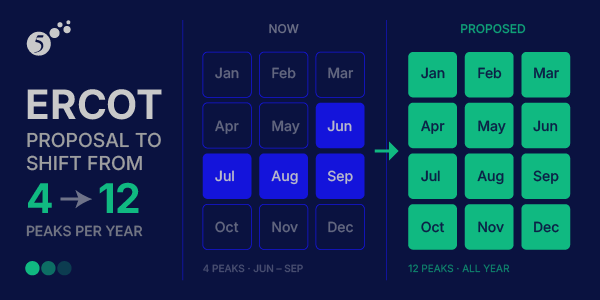
ERCOT Market 3X-ing Coincident Peak Method, Moving from 4CP to 12CP
 May 20, 2026
5 Key Takeaways from Our "Navigating Energy Markets and the Middle East Conflict" Webinar
 April 27, 2026
What the Middle East Conflict Means for Energy Markets
 April 14, 2026
Coincidental Peak Alerts
 Feb. 24, 2026
Stress Test: How Winter Storm Fern Moved Energy Markets
 Feb. 24, 2026
Watts Next? 2025 Lessons and 2026 Predictions
 Jan. 22, 2026
Webinar Recording: “Demand Response: The Energy Strategy Hiding in Plain Sight"