
Market Info & Updates

Topics: PJM
Industries: All industries
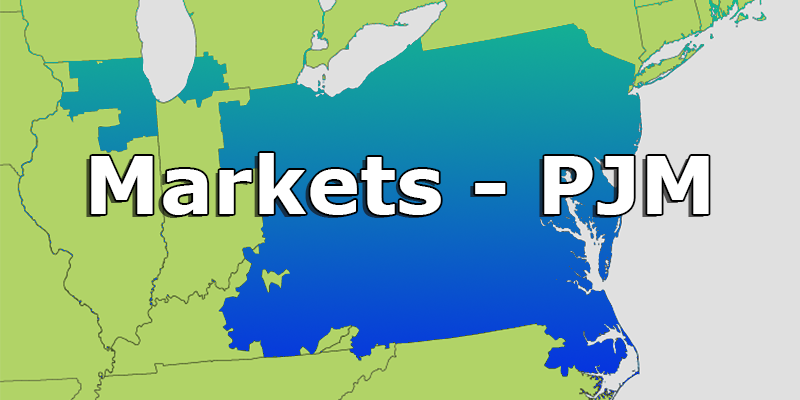
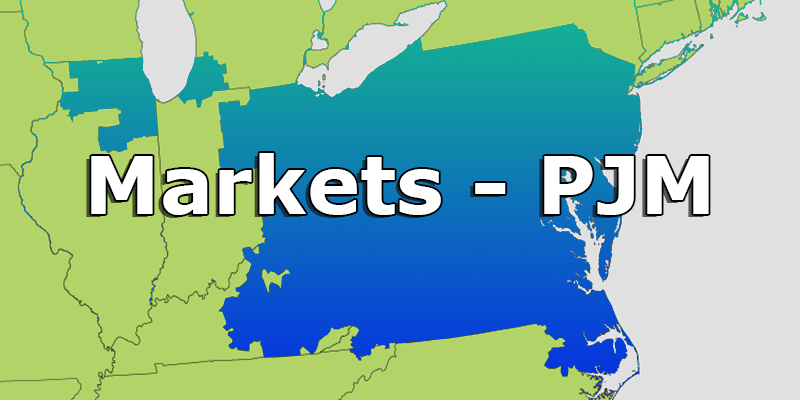
On January 8th, the New Jersey Board of Public Utilities (NJBPU) approved a new program that will allow PSE&G to spend $780M over the next four years to install smart meters in homes and businesses throughout its territory. This move is intended to create a more integrated network between customers and the electricity grid that will provide more transparency to price signals and ultimately help homeowners and businesses to make more informed energy decisions. These upgraded and improved meters will also provide near real-time outage detection and help customers to be more aware of their energy consumption.This step by PSE&G and the NJBPU brings New Jersey more in line with initiatives that have been rolled out in other states within the PJM Interconnection. In Ohio, smart meter installations have already started in AEP, Ohio Edison, Toledo Edison and the Illuminating Company service areas. In Pennsylvania, the deployment of smart meters in Penn Power, Penelec, Met-Ed and West Penn Power has already been completed and is mostly finished in PECO’s service area.
These initiatives to install smart meters in New Jersey and elsewhere within PJM will enable smaller commercial customers to gain better control over their energy costs. Without smart meters, electricity customers are billed on average values based on tariffs that are established for a given utility rate class. Under this utility tariff structure, electricity customers that are less efficient are subsidized by those that are more energy efficient. This form of subsidization is, in part, what prompted many states to deregulate their energy markets as large electricity clients wanted to be proactive and have more control over their energy expenses as opposed to being tied to a utility tariff.
Like large electricity customers, smart meters will enable smaller commercial clients to control their capacity costs and their Peak Load Contribution (PLC) values. Capacity costs and PLC values are established by the maximum amount of power that an electricity customer draws from the grid on days when electricity demand is high. Larger electricity customers have used smart meter data to curtail their electricity use on hot summer days when electricity supplies struggle to keep up with demand. This ability to cut demand when the grid peaks will lower both PLC values and capacity costs. The installation of smart meters throughout PSE&G will enable smaller commercial and industrial clients to reap these same benefits.
Smart meters will also enable clients with favorable load shapes to reduce their energy expenses. Any business which, due to the nature of their operations, can shift their peak demand away from summer afternoons, will benefit from smart meters. For these clients, electricity products can be structured in a way that leverages this ability and drives down both supply and delivery costs.
PSE&G claims that it plans to convert all 2.3 million existing electric customers to smart meters by the end of 2024. The utility also claims that it will allow customers to opt-out of the new metering program and keep their existing meters for a $12 per month meter reading fee. While it is likely that some portion of the smart meter costs will be included in future rate case adjustments, it also likely these costs can be offset through lower capacity costs and PLC values for businesses that are proactive in managing their facility’s peak demand.

 Nov. 9, 2026
Bring Your Own New Capacity: A New Opportunity for Demand Response
 Nov. 4, 2026
5 Acquires Legacy Energy, Expanding Our Reach in PJM and MISO
 Oct. 9, 2026
Winter 2026-27 Outlook for Gas and Power Markets: 5 Things to Know from our Live With 5
 Sept. 10, 2026
Buy or Wait? Why Waiting is Also an Energy Buying Strategy
 Sept. 10, 2026
New Rules, New Developments: An Update on Data Center Regulation
 July 31, 2026
5 Things to Know From Our Webinar "How Data Center Growth is Reshaping Power Markets"
 May 20, 2026
5 Key Takeaways from Our "Navigating Energy Markets and the Middle East Conflict" Webinar
 April 27, 2026
What the Middle East Conflict Means for Energy Markets
 April 14, 2026
Coincidental Peak Alerts
 Feb. 24, 2026
Stress Test: How Winter Storm Fern Moved Energy Markets
 Feb. 24, 2026
Watts Next? 2025 Lessons and 2026 Predictions
 Jan. 22, 2026
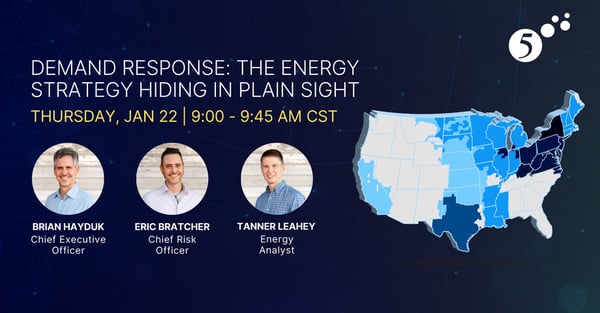
Webinar Recording: “Demand Response: The Energy Strategy Hiding in Plain Sight"