
Market Info & Updates

Industries: All industries

The opening chapter of Alice in Wonderland is aptly titled “Down the Rabbit Hole.” Alice’s adventures begin when she follows a rabbit down its hole and consumes items that cause her body to expand and contract. Alice’s journey has been a metaphor for mind-altering experiences ever since.
Some say that the idea of carbon capture and sequestration (CCS) as a greenhouse gas solution is equally fraught with unrealistic concepts. The CCS process captures CO2 produced by power plants and compresses it into a liquid. It is then transported to certain geologically receptive areas where it may be injected (or “sequestered”) in porous and permeable rock formations deep below the ground, a mile or more in some cases. Thick layers of dense rock above the porous areas prevent the CO2 from escaping to the atmosphere.
While the process seems straightforward, there are downsides. Primarily, the cost to compress and transport CO2 may be prohibitive. As reported by MIT Technology Review last year, the Boundary Dam project utilized a recently significant advance in CCS technology with the opening of its combined 110-megawatt coal plant in Saskatchewan. The CCS unit consumes 21 percent of the plant’s power, and at $7,300 per kW, the plant is among the most costly generators.
Other obstacles to CCS include the seismic damage and groundwater pollution that may be caused by liquids being pumped underground in large quantities and at high-pressure. The US Geological Survey (USGS) is in the process of studying environmental impacts and geologic storage capabilities in the United States.
Is sequestration realistic? Yes and no. On the scale necessary to have a serious impact, at present, it is more similar to the diminutive Alice who shrinks by drinking from the bottle labeled “Drink Me.” However, sequestration is one of many tools that may come out of a Mad Hatter tea party of suggestions for reducing greenhouse gasses.

 Nov. 9, 2026
Bring Your Own New Capacity: A New Opportunity for Demand Response
 Nov. 9, 2026
New SBTi Rules Could Change What You Pay For RECs
 Nov. 4, 2026
5 Acquires Legacy Energy, Expanding Our Reach in PJM and MISO
 Oct. 20, 2026
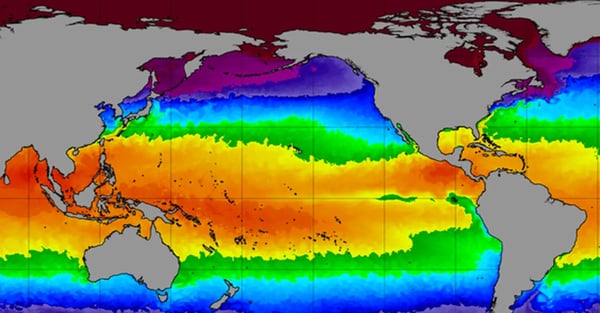
El Niño: What California Energy Buyers Should Know About Energy Prices
 Oct. 9, 2026
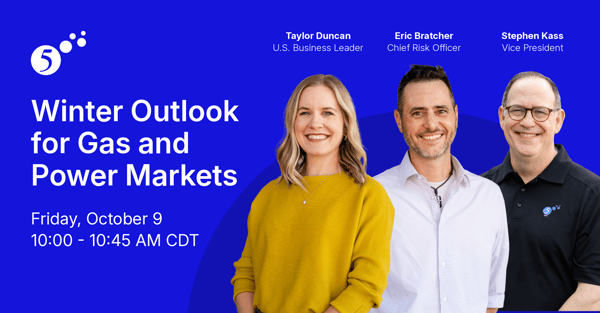
Winter 2026-27 Outlook for Gas and Power Markets: 5 Things to Know from our Live With 5
 Sept. 30, 2026
California’s Electricity Market Is Changing: What Energy Buyers Need to Know About EDAM and Resource Adequacy
 Sept. 10, 2026
Buy or Wait? Why Waiting is Also an Energy Buying Strategy
 Sept. 10, 2026
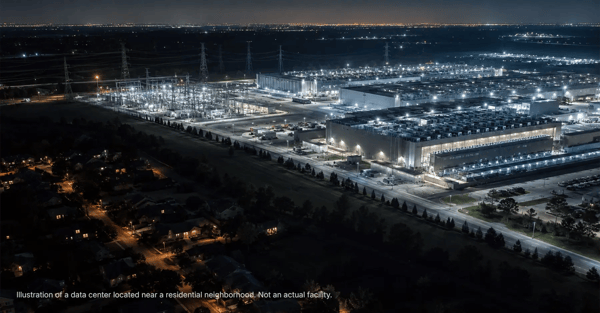
New Rules, New Developments: An Update on Data Center Regulation
 July 31, 2026
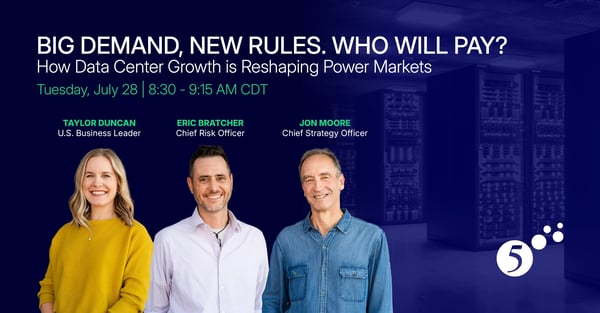
5 Things to Know From Our Webinar "How Data Center Growth is Reshaping Power Markets"
 July 24, 2026
Our 8-to-5 Policy
 June 29, 2026
Managing Regulatory Risk: How Consumer Power Advocates Helps New York's Largest Nonprofits
 June 29, 2026
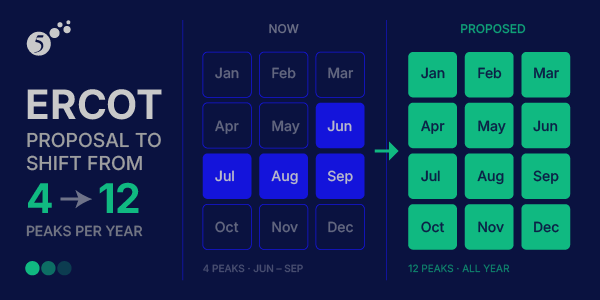
ERCOT Market 3X-ing Coincident Peak Method, Moving from 4CP to 12CP