

It comes as no surprise to energy managers that their electric bills are often the highest during the summer months. This is due, in large part, to the additional electric loads required to keep buildings and facilities comfortable during the hottest days of the year. While the impact on those summer bills may be obvious from a consumption perspective, a less obvious but equally important factor that affects electricity expenses is the installed capacity (ICAP) tag set each summer. In New York, every electricity customer’s ICAP tag is determined by the amount of electricity used when the power grid reaches its system peak. Current New York Independent System Operator (NYISO) rules state that the system peak must occur in July and August on a non-holiday weekday. Last summer, the peak hour occurred at 5:00 PM on July 27, 2020, when the electricity demand on the grid was 30,660 MWs.
The NYISO uses the aggregate of all ICAP tags across the state to forecast the electricity generating capacity that is required to keep up with demand on those peak days. The expected peak load for the summer of 2021 in New York and the amount of generation available to meet that demand are shown in Figure 1.
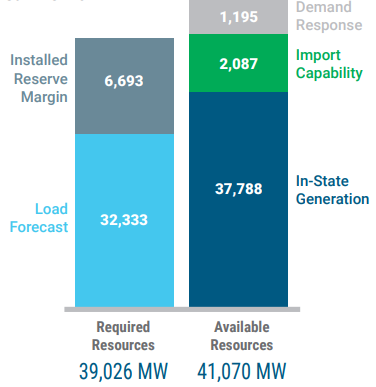
Figure 1: Statewide Resource Availability- Summer 2021 from nyiso.com
Typically, the electricity grid in New York hits its peak late in the afternoon during hot summer days when there is a high demand for air conditioning. Figure 2 shows that during the summer, that system peak usually occurs between 5:00 and 6:00 PM.
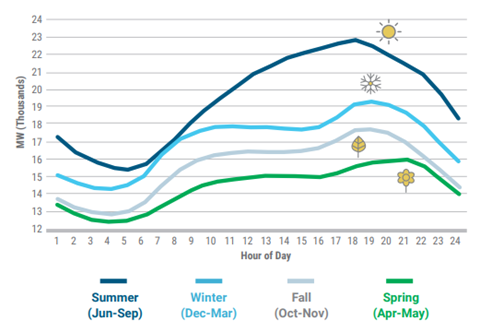
Figure 2: New York Control Area (NYCA) Seasonal Load Shapes- 2020 from nyiso.com
With proper planning and communication, a client’s ICAP tag can be reduced or completely avoided by taking steps to reduce electricity usage on those days when the NYISO’s load forecast approaches 30,000 MWs. 5 sends notifications on those days when the grid has a higher probability of hitting its peak and setting new ICAP tags for the following year.
Upon receiving a notification for potential peak setting days, consider some or all of the following actions to reduce your electric load between 2:00 PM and 6:00 PM
-
Pre-cool buildings in the early afternoon and adjust your thermostat to ride through the projected peak demand period
-
Reduce fan speeds on air handlers
-
Dim or completely turn off lights
-
Turn off pumps, air compressors, or other equipment if possible
-
Consider adjusting operational hours or scheduled downtimes
5 helps clients create peak load reduction strategies, many of which include participation in Demand Response programs that compensate businesses that can reduce electricity usage on high-demand days. 5 also offers annual working sessions for clients actively engaged in peak management to review the prior year’s performance while also planning for the year ahead. The financial impact of a proactive peak load management plan can be substantial. 5 believes that proactive peak management is one of the coolest things we can do to help clients find some relief from the summertime heat.